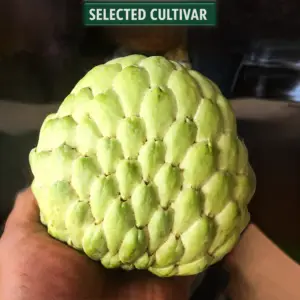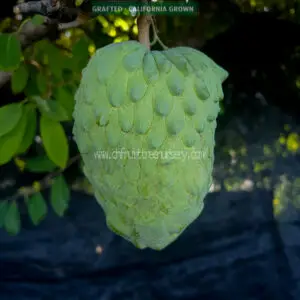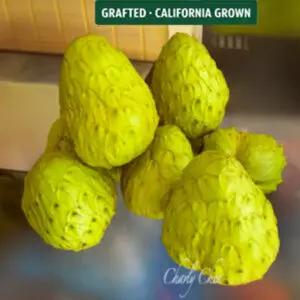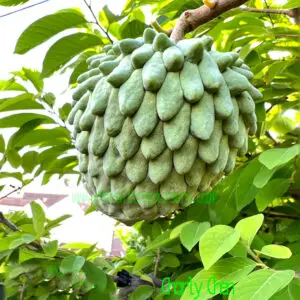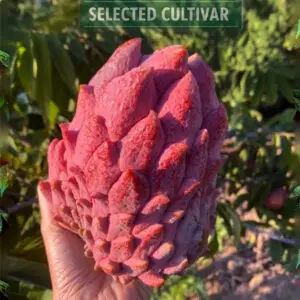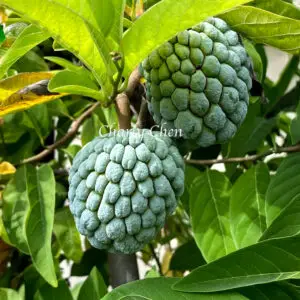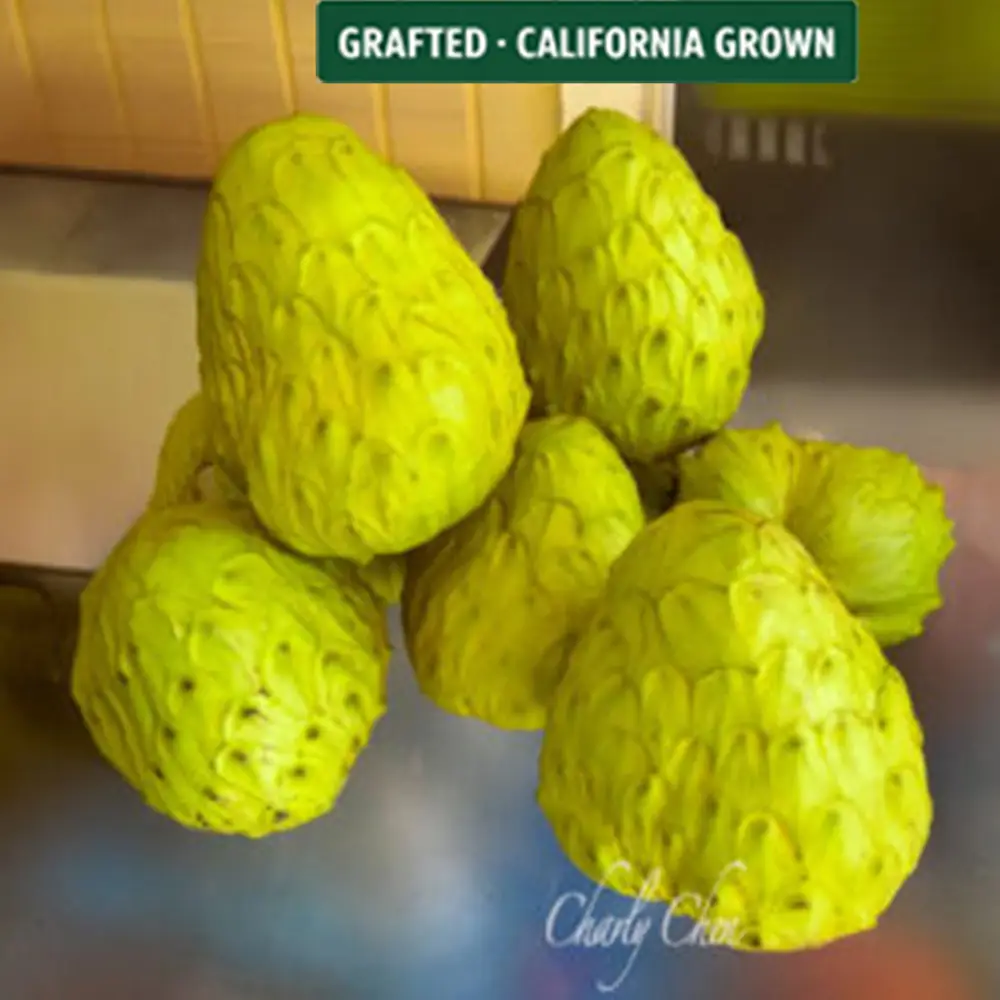
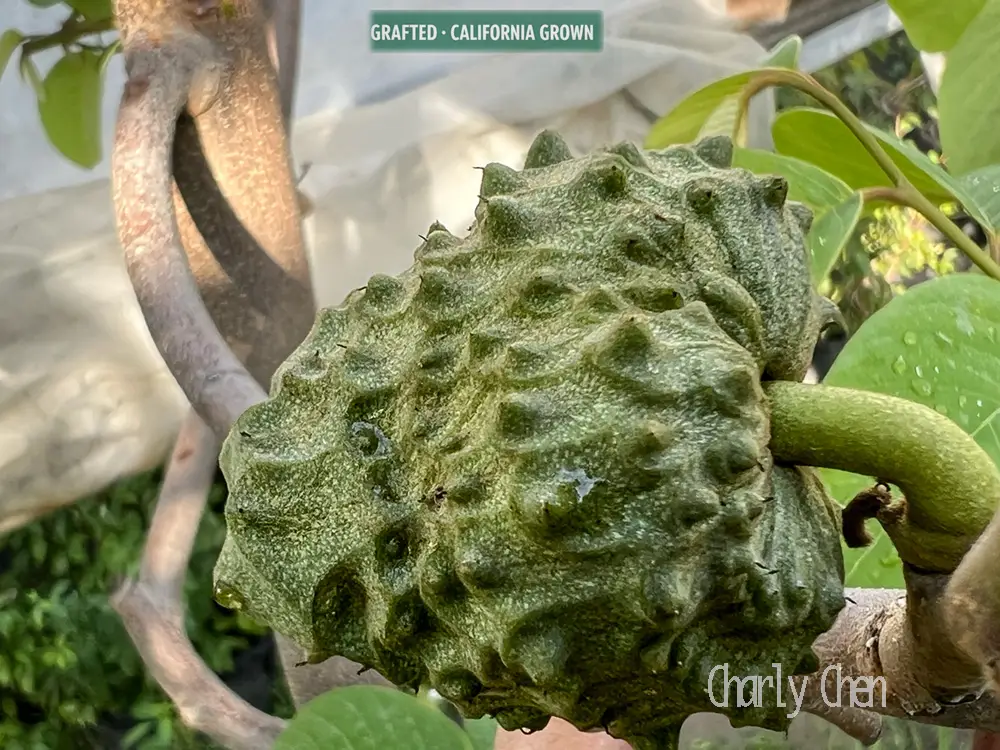
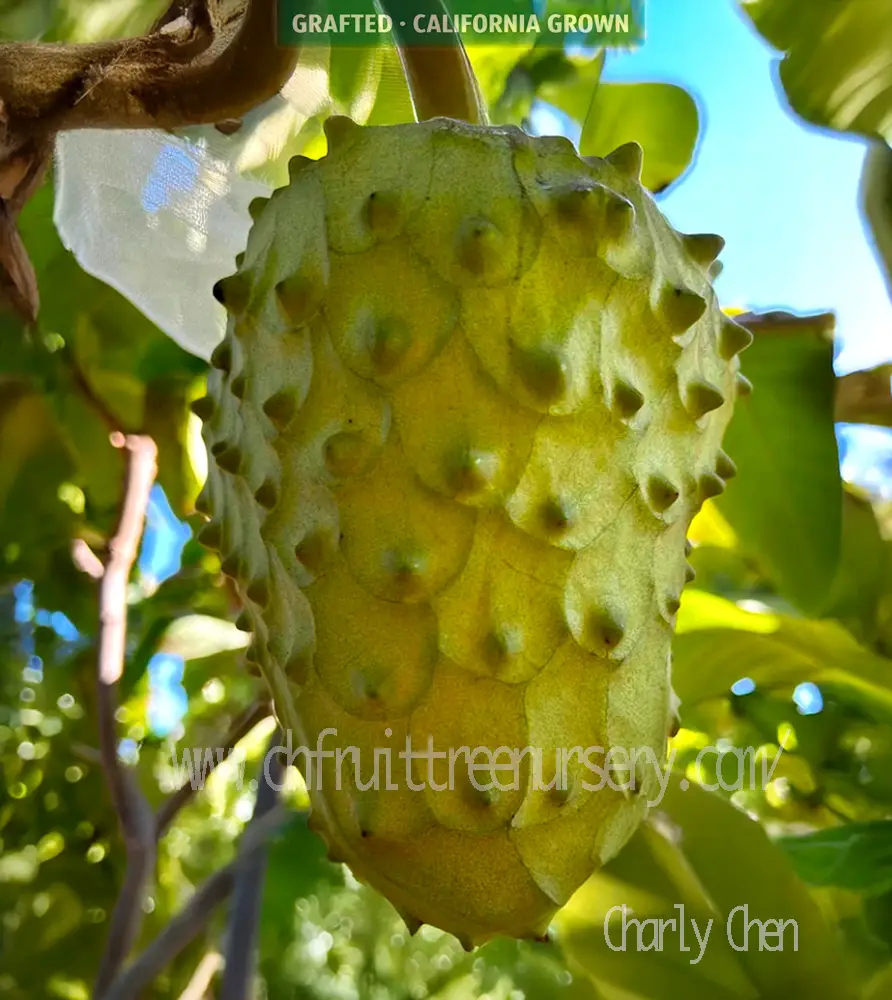
Dr. White Cherimoya is a classic California-developed variety known for its smooth texture, rich sweetness, and outstanding custard-like flavor. Fruits are medium to large with soft creamy flesh that melts in the mouth and delivers the traditional cherimoya taste favored by collectors and home orchard growers.
This variety is valued for dependable productivity and adaptability to Southern California growing conditions. Grafted Dr. White trees begin fruiting earlier than seedlings and maintain consistent fruit quality over many seasons.
All trees are grafted and nursery-grown in California using carefully selected rootstocks to ensure strong establishment, healthy canopy development.
Fruit Characteristics
-
Fruit Size: Medium to large
-
Skin: Smooth to slightly bumpy
-
Flesh: Soft, smooth custard texture
-
Flavor: Very sweet, aromatic classic cherimoya flavor
-
Seed Count: Moderate
-
Harvest Season (CA): Winter to early spring
Tree & Growing Information
-
Tree Vigor: Moderate
-
Growth Habit: Upright spreading canopy
-
Pollination: Hand pollination increases fruit size
-
Climate: Ideal for coastal and Southern California climates
-
Bearing Age: Early bearing grafted tree
-
Uses: Backyard orchards, collectors, premium fruit production
Atemoya Technical Growing Information
Climate Requirements
Atemoya trees perform best in warm subtropical to Mediterranean climates. In California, they grow successfully in coastal, inland valley, and protected warm-zone locations where winter frost is minimal. Young trees benefit from light frost protection during the first few winters.
Soil & Planting
Atemoya trees prefer well-drained soil and should not be planted in areas where water accumulates. Raised beds or mounded planting areas improve root development and long-term tree health. When planting, ensure the graft union remains above soil level to maintain proper scion growth.
Irrigation
Moderate and consistent irrigation promotes healthy canopy development and fruit production. Avoid overwatering, especially in heavy soils, as excessive moisture may slow root growth. Deep watering at longer intervals is generally preferred over frequent shallow irrigation.
Fertilization
Balanced fertilization during the growing season encourages strong vegetative growth and supports fruit development. Apply slow-release fertilizers or organic nutrient sources several times during the warm growing months while reducing fertilization during winter dormancy.
Pollination
Hand pollination significantly improves fruit set, fruit size, and uniform fruit shape. In many backyard environments, natural pollinators may be limited; therefore, supplemental hand pollination is commonly practiced by collectors and specialty fruit growers to maximize production.
Pruning & Tree Management
Regular structural pruning encourages branching, maintains manageable tree size, and improves sunlight penetration. Atemoya trees respond well to pruning and can be trained for backyard orchard systems or compact production plantings.
Bearing Age
Grafted Atemoya trees typically begin producing fruit earlier than seedling-grown trees. Under proper care, healthy grafted trees can begin flowering and fruiting within a few seasons after planting.